Research Support
AI-powered Research Support
Fact Checker function
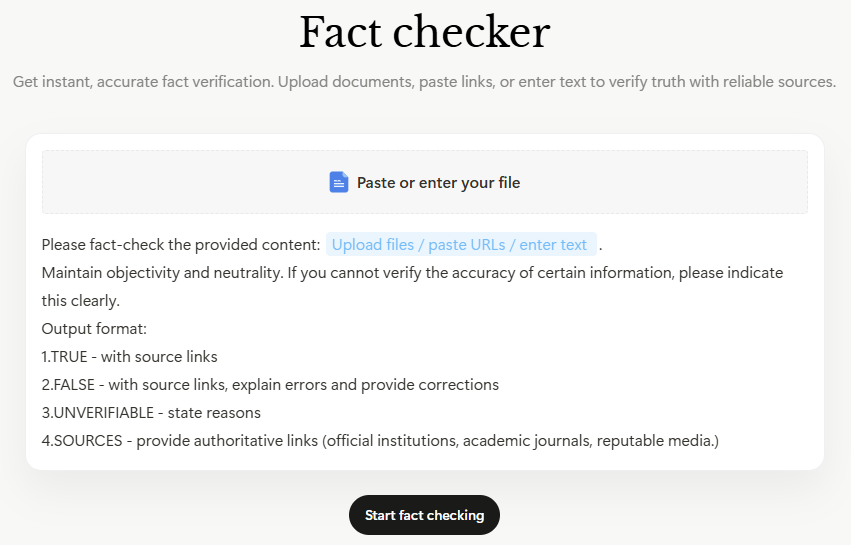
This function helps chemistry educators verify the accuracy of scientific information and data used in lessons, reports, or student work with resources. It can quickly check chemical facts, formulas, or environmental claims, reducing misinformation and ensuring classroom materials remain scientifically reliable and up to date.
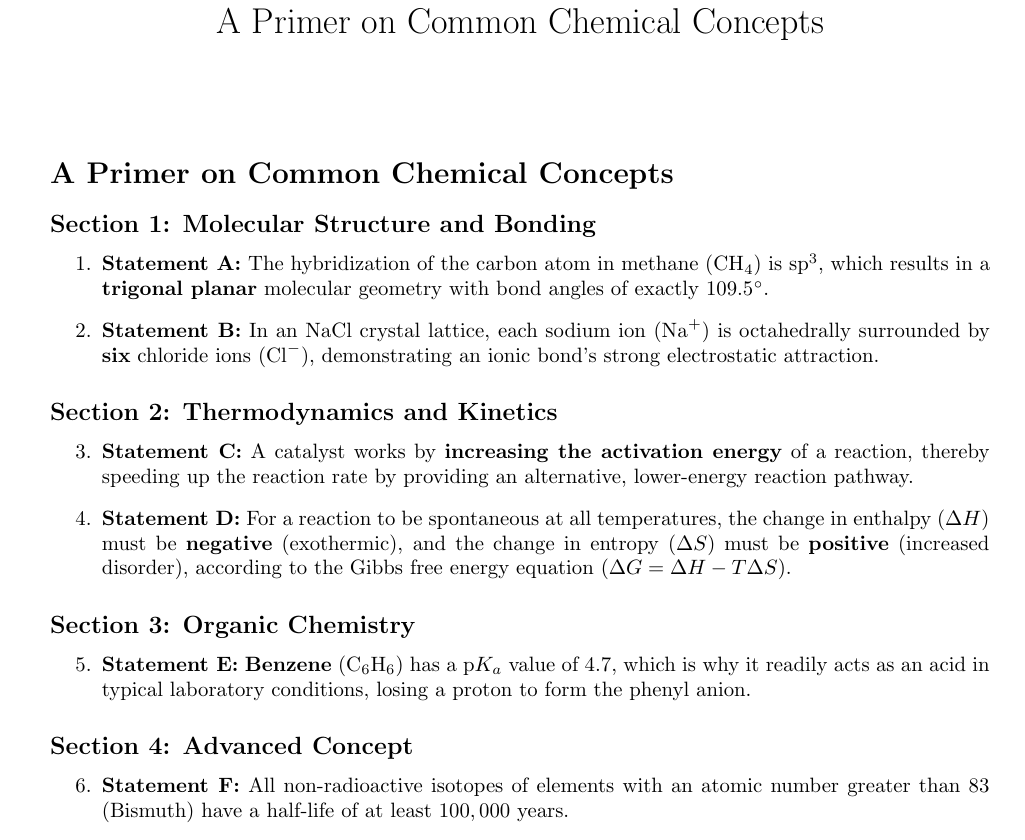
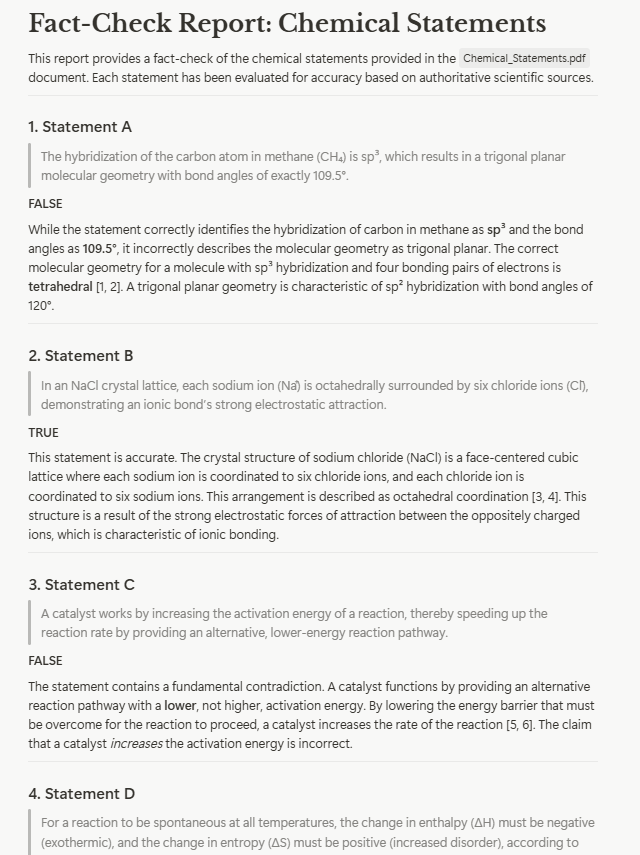
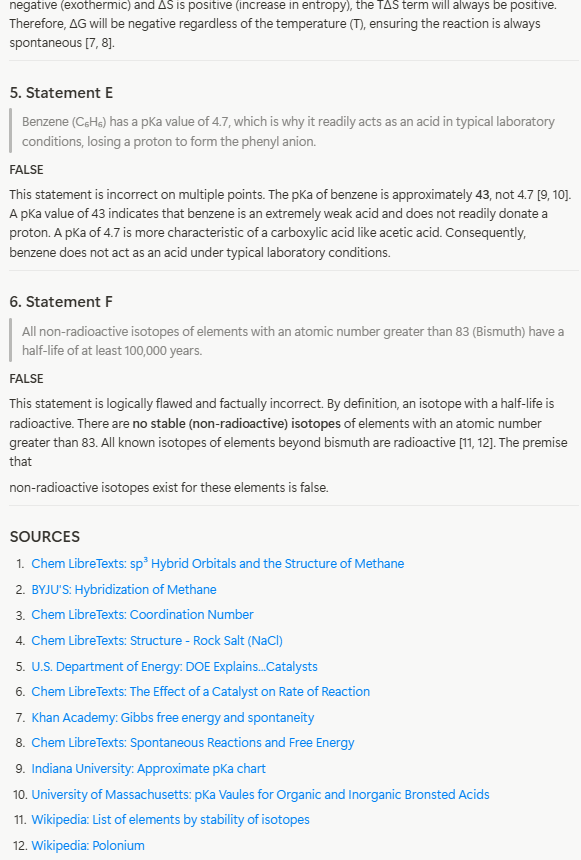
Demo case credit cost: -106
The facts file I uploaded for it to check is shown on the left, and the results are on the right (two pictures). Manus generated a document that included accurate evaluations for each statement and provided the sources as clickable links. I verified that all the links were functional and led to valid sources.
Essay Outline Generator function
This function helps chemistry educators guide students in planning and structuring scientific essays or research papers. It generates clear outlines with introductions, body sections, supporting evidence, and references, helping students organize arguments for topics such as chemical reactions, sustainability, or laboratory safety. It is useful for teaching academic writing and critical thinking in chemistry.
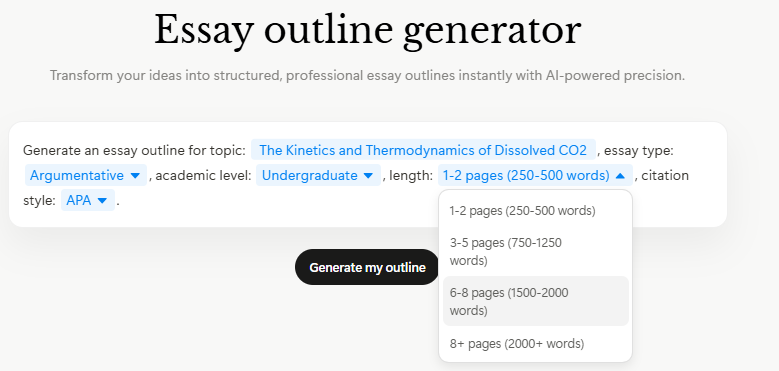
Users can enter their own topics and choose from several essay types, including Argumentative, Application, Descriptive, Analytical, Narrative, Scholarship, Expository, Persuasive, and Other.
Academic levels available include High School, Undergraduate, Master, and PhD.
Length options include 1–2 pages (250–500 words), 3–5 pages (750–1250 words), 6–8 pages (1500–2000 words), and 8+ pages (2000+ words).
Citation styles offered are APA, MLA, Chicago, Harvard, IEEE, AMA, and Other.
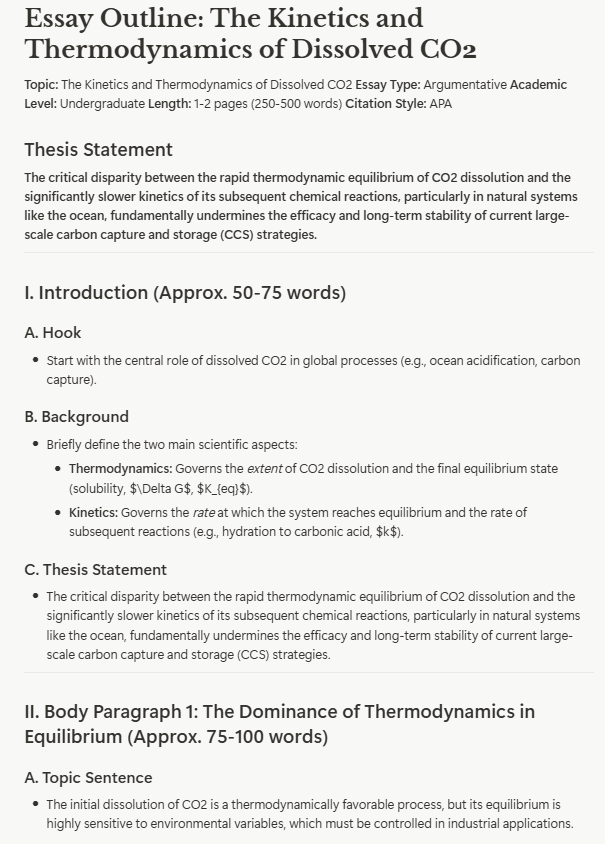
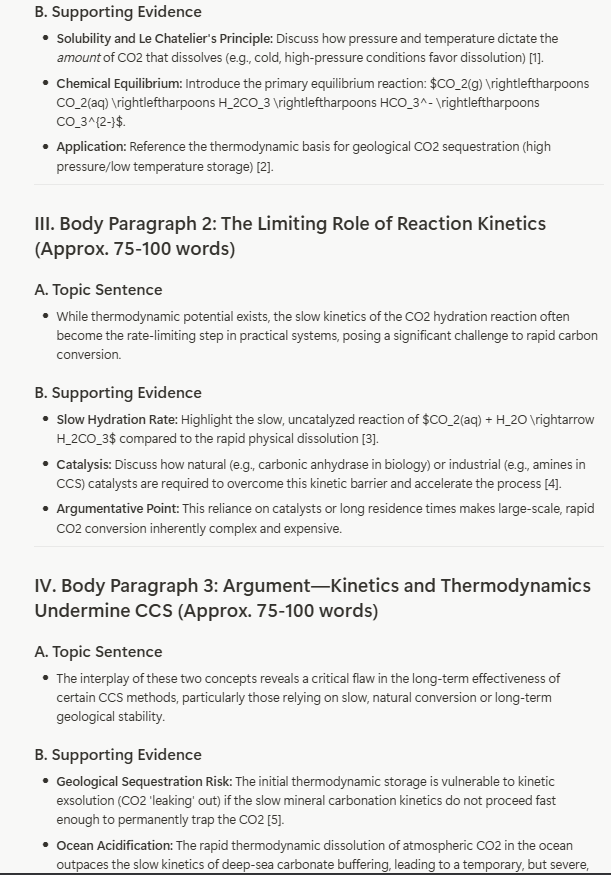
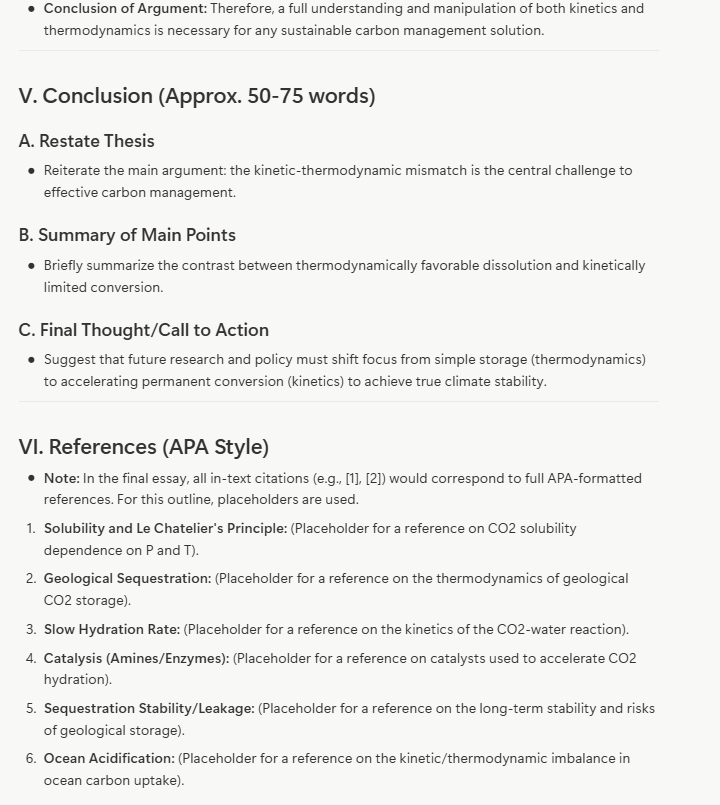
Demo case credit cost: -21 (Input shown above)
It generated a well-structured outline with an introduction, body paragraphs, supporting evidence, conclusion, and references. The interface includes a convenient menu bar for navigating through the essay’s chapters. However, one flaw was observed: for certain chemical formulas, the system used Markdown formatting, and when the file was exported as a .doc document, the chemical formulas appeared as garbled text.